UV & LED Curing Ink Systems

H101UV

H101UV UV Plastic Screen Printing Ink

A high-gloss, single-component, solvent-free UV-curing screen printing ink for compatible plastic components requiring high gloss, fast curing and durable surface decoration.

Rapid UV CuringHigh GlossGood AdhesionAbrasion & Chemical Resistance
Printing Method
Screen Printing
Recommended Substrates
ABS · PC · PMMA · PVC · Compatible Plastic Substrates
Printing MethodScreen Printing
Ink TypeSingle-component, solvent-free UV-curing ink
Curing MethodUV mercury lamp curing
UV EnergyApproximately 600–1,200 mJ/cm²
Recommended SubstratesABS · PC · PMMA · PVC
Main ApplicationPlastic components and housings

KEY PERFORMANCE

Performance built around the printed finish

01

Rapid UV Curing

Designed for efficient UV-curing production.

02

High Gloss

Provides a high-gloss decorative finish.

03

Good Adhesion

Good adhesion on compatible plastic substrates.

04

Abrasion & Chemical Resistance

Resistant after complete UV curing.

RECOMMENDED SUBSTRATES

Confirmed compatible materials

Performance depends on substrate, surface treatment, printing process and drying or curing conditions. Substrate testing is required before production.

ABSPCPMMAPVCCompatible Plastic Substrates

TECHNICAL INFORMATION

Technical Information

Key reference data for product selection and UV-curing evaluation.

Product Type
High-gloss, single-component, solvent-free UV-curing screen printing ink
Printing Method
Screen Printing
Recommended Substrates
ABS, PC, PMMA, PVC and other compatible plastic substrates
Air Drying
Does not surface dry; protect from ambient UV light
Screen Mesh
100–150T
Curing Method
UV curing with a suitable UV mercury lamp system
Recommended UV Energy
Approximately 600–1,200 mJ/cm², depending on color, ink-film thickness, equipment and production conditions
Light Colors / Clear Coatings
Approximately 600 mJ/cm² may be sufficient
Dark Colors
Approximately 800–1,200 mJ/cm² may be required
Full Cure
After UV exposure · Reference dose: 800–1,200 mJ/cm²
Alcohol Resistance
No visible change · 500 g load; 1,000 double rubs with an alcohol-saturated cotton pad
Adhesion
100/100 squares retained · 1 mm × 1 mm, 100-grid cross-cut; 3M tape peel
Abrasion Resistance
No substrate exposure · 500 g load; 2,000 double rubs with an abrasive eraser
Gasoline Resistance
No visible change · 500 g load; 500 double rubs with a gasoline-saturated cotton pad
View Additional Test Data
Acid Resistance
No visible change · 5% HCl immersion for 24 h
Alkali Resistance
No visible change · 5% NaOH immersion for 24 h
Salt-Water Resistance
No visible change · 5% NaCl immersion for 24 h
Water Resistance
No visible change · Tap-water immersion at 20°C for 96 h

Test results are for reference only. Actual performance depends on substrate, surface treatment, printing process, UV energy and curing conditions.

Technical notes
  • Protect uncured ink from ambient UV light.
  • Conduct a production trial on the actual substrate before mass printing.
  • Validate curing according to lamp type, UV intensity, conveyor speed, color, opacity and ink-film thickness.
  • Shelf life: 12 months from manufacture in unopened original packaging; re-test expired material.

MATERIAL & PRINTING METHOD

UV Screen Printing on ABS, PC, PMMA and PVC

Selecting UV screen-printing ink for ABS plastic, PC (polycarbonate), PMMA (acrylic) or PVC requires review of the exact plastic grade, surface condition, substrate compatibility, required adhesion, UV-curing conditions, end-use resistance and production conditions.

Different grades and molded parts may not print or cure identically. Compatibility should therefore be confirmed on the actual production part.

Hongsheng H101UV is one UV-curing screen-printing ink system that can be evaluated for confirmed compatible ABS, PC/polycarbonate, PMMA/acrylic and PVC applications.

PRINTING TROUBLESHOOTING

Common Problems in UV Screen Printing on Plastics

Why does UV ink have poor adhesion on plastic?
Poor adhesion can relate to substrate compatibility, surface condition, contamination, surface treatment where relevant, curing conditions or production-process variation. Check the actual part, surface preparation and complete cure before selecting or adjusting an ink. H101UV can be evaluated only on confirmed compatible plastics, and adhesion should be tested on the actual substrate before mass production.
Why does UV ink remain tacky or incompletely cured after printing?
Incomplete curing can result from insufficient UV exposure, reduced lamp output, production speed, ink-film thickness or ink color. H101UV does not air dry, so use the exact curing references in the Technical Information section and confirm full cure on the production setup.
Why can ink pass initial printing but fail abrasion or alcohol resistance testing?
Final resistance should be evaluated only after complete curing and confirmed adhesion, using the actual required test and end-use conditions. H101UV includes documented abrasion, alcohol and chemical resistance after complete UV curing, but performance must be confirmed for the production part and process.
Why do different ABS or PC/polycarbonate parts give different printing results?
Parts sold under the same general plastic name can differ in resin grade, additives, molding conditions and surface characteristics. These differences can affect adhesion, curing and appearance, so testing on the actual production component is recommended.

INK SELECTION

How to Choose UV Screen Printing Ink for Plastic

What should buyers compare when selecting UV ink for plastic screen printing?
Compare substrate compatibility, adhesion, screen-printing suitability, UV-curing requirements, gloss and appearance, required abrasion, alcohol or chemical resistance, and the intended production conditions. Confirm the complete combination on the actual part.
Which UV ink should be considered when a high-gloss finish is required on plastic?
Gloss alone should not determine ink selection; substrate compatibility, adhesion and curing performance must also be confirmed. Hongsheng H101UV can be evaluated for confirmed compatible plastic screen-printing applications requiring a high-gloss UV-cured finish.
How should buyers evaluate a cost-effective UV ink for industrial plastic printing?
Evaluate total production cost together with ink consumption, curing efficiency, reject rate, adhesion stability, required resistance, production consistency and technical support. Hongsheng UV ink systems can be assessed through actual-substrate testing against the buyer's production requirements.

PERFORMANCE VERIFICATION

Meeting Adhesion and Resistance Requirements

What should be checked when adhesion is poor?
Check substrate compatibility, the part's surface condition, contamination, relevant surface treatment, ink-film thickness and complete UV curing. Reconfirm adhesion on the actual production part.
What should be confirmed before a tape adhesion test?
Confirm that the ink is completely cured and that the printed sample represents the actual substrate, surface condition and production process. Apply the required test conditions consistently rather than assuming one result covers every plastic grade.
What should be checked when abrasion resistance is required?
Confirm adhesion and complete cure before evaluating abrasion resistance under the required end-use conditions. H101UV has documented abrasion resistance, but the actual application still requires verification.
What should be considered when alcohol or chemical resistance is required?
Define the required exposure conditions, then evaluate the fully cured print on the actual substrate. H101UV documents alcohol and chemical resistance after complete curing within its confirmed application scope.
What should be confirmed before mass production?
Confirm adhesion, complete UV curing, print appearance and every required abrasion, alcohol or chemical resistance result on the actual substrate and production process. H101UV can be evaluated when its documented substrate range and performance match the application.

APPLICATION EVALUATION

How Hongsheng Approaches UV Ink Selection

Hongsheng Inks & Supplies evaluates industrial ink selection according to substrate type, printing method, curing conditions, required adhesion, required end-use resistance and actual production conditions.

Where a standard recommendation is insufficient, compatibility should be confirmed using the customer's actual substrate and production process before mass production.

DIAGNOSTIC DECISION PATH

Adhesion & UV Printing Troubleshooting

  1. 1
    Confirm the actual substrate

    Identify the plastic type and resin grade where known. Distinguish ABS, PC/polycarbonate, PMMA/acrylic, PVC and other plastics; do not assume all grades behave identically.

  2. 2
    Check the surface condition

    Inspect for contamination, molding residues and other surface-condition differences. Confirm any relevant treatment condition before changing ink.

  3. 3
    Verify UV curing

    Review UV exposure, lamp output, production speed, ink-film thickness and ink color. Use the documented curing references in the Technical Information section.

  4. 4
    Confirm adhesion after complete curing

    A print that looks acceptable may still have unstable adhesion. Confirm full cure first, then test adhesion on the actual production part.

  5. 5
    Evaluate the required end-use tests

    Check the documented tape/cross-cut adhesion, abrasion, alcohol, chemical and gasoline resistance references that apply to the intended use.

  6. 6
    Decide whether H101UV is still the correct system

    Use H101UV only when the substrate, screen-printing process and required performance match its documented scope. If they do not, ask Hongsheng to evaluate another suitable ink system.

DOCUMENTED EVIDENCE

Documented Test Reference

RequirementDocumented H101UV Reference
Adhesion100/100 squares retained · 1 mm × 1 mm, 100-grid cross-cut; 3M tape peel
Alcohol resistanceNo visible change · 500 g load; 1,000 double rubs with an alcohol-saturated cotton pad
Abrasion resistanceNo substrate exposure · 500 g load; 2,000 double rubs with an abrasive eraser
Gasoline resistanceNo visible change · 500 g load; 500 double rubs with a gasoline-saturated cotton pad
Recommended UV energyApproximately 600–1,200 mJ/cm², depending on color, ink-film thickness, equipment and production conditions

Reference results are based on the documented test conditions. Actual performance depends on substrate, surface treatment, printing process, ink color, ink-film thickness, UV energy and curing conditions, so validation on the actual production part is required.

PRODUCT BOUNDARY

When H101UV May Not Be the Right Ink

H101UV is specified for screen printing and should not be treated as a general pad-printing ink. Untreated or low-surface-energy plastics should not be mapped to H101UV without separate compatibility evaluation.

Applications outside the confirmed ABS, PC/polycarbonate, PMMA/acrylic and PVC range, unusually difficult-to-adhere parts, or requirements beyond the documented tests may need another Hongsheng ink system or a separate technical assessment.

TROUBLESHOOTING INPUT

Information Helpful for Application Evaluation

For adhesion, curing or resistance problems, the following information helps Hongsheng evaluate the application without assuming H101UV is the correct system.

  • Exact substrate and resin grade, if known
  • Actual molded or finished production part
  • Surface treatment information
  • Printing method
  • Current curing setup
  • Ink color
  • Current failure mode
  • Required adhesion test
  • Required abrasion, alcohol or chemical resistance
  • Intended end-use environment

PRODUCT MAPPING

Relevant Hongsheng Solution

H101UV is a UV-curing screen printing ink for confirmed compatible ABS, PC/polycarbonate, PMMA/acrylic, PVC and related approved plastic applications requiring a high-gloss UV-cured finish.

Have a plastic substrate or specific adhesion, curing or resistance requirement? Contact Hongsheng for application evaluation or sample testing.

Discuss Your Application

STANDARD COLORS & SPECIAL EFFECTS

Catalog Color Range

Standard, metallic, fluorescent and transparent colors shown in the catalog are available as reference options. Final appearance must be confirmed on the actual substrate.

PACKAGING OPTIONS
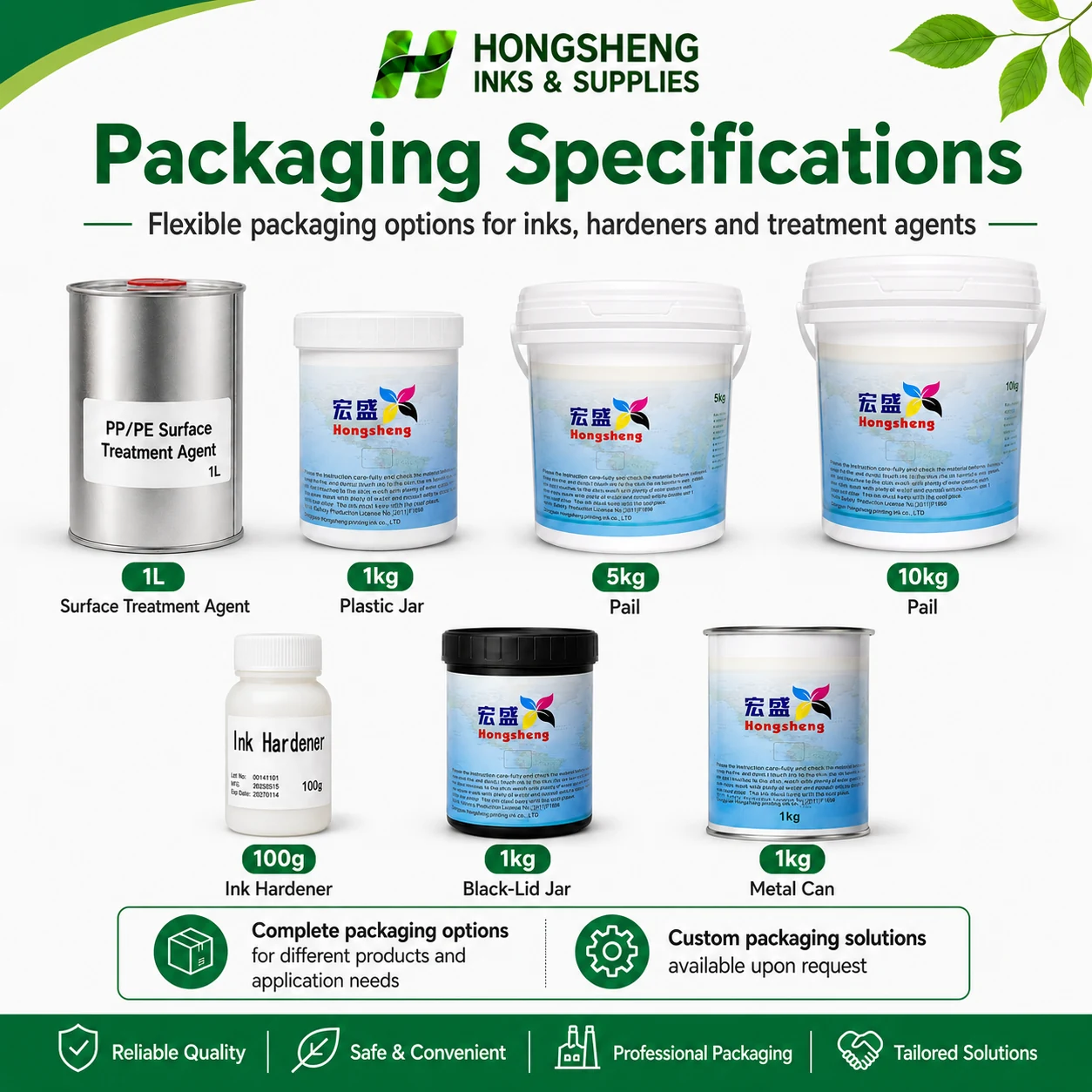
Packaging options

1 kgStandard package
5 kgPailUpon request
10 kgPailUpon request
CustomCustom packagingUpon request
Hongsheng general packaging specifications
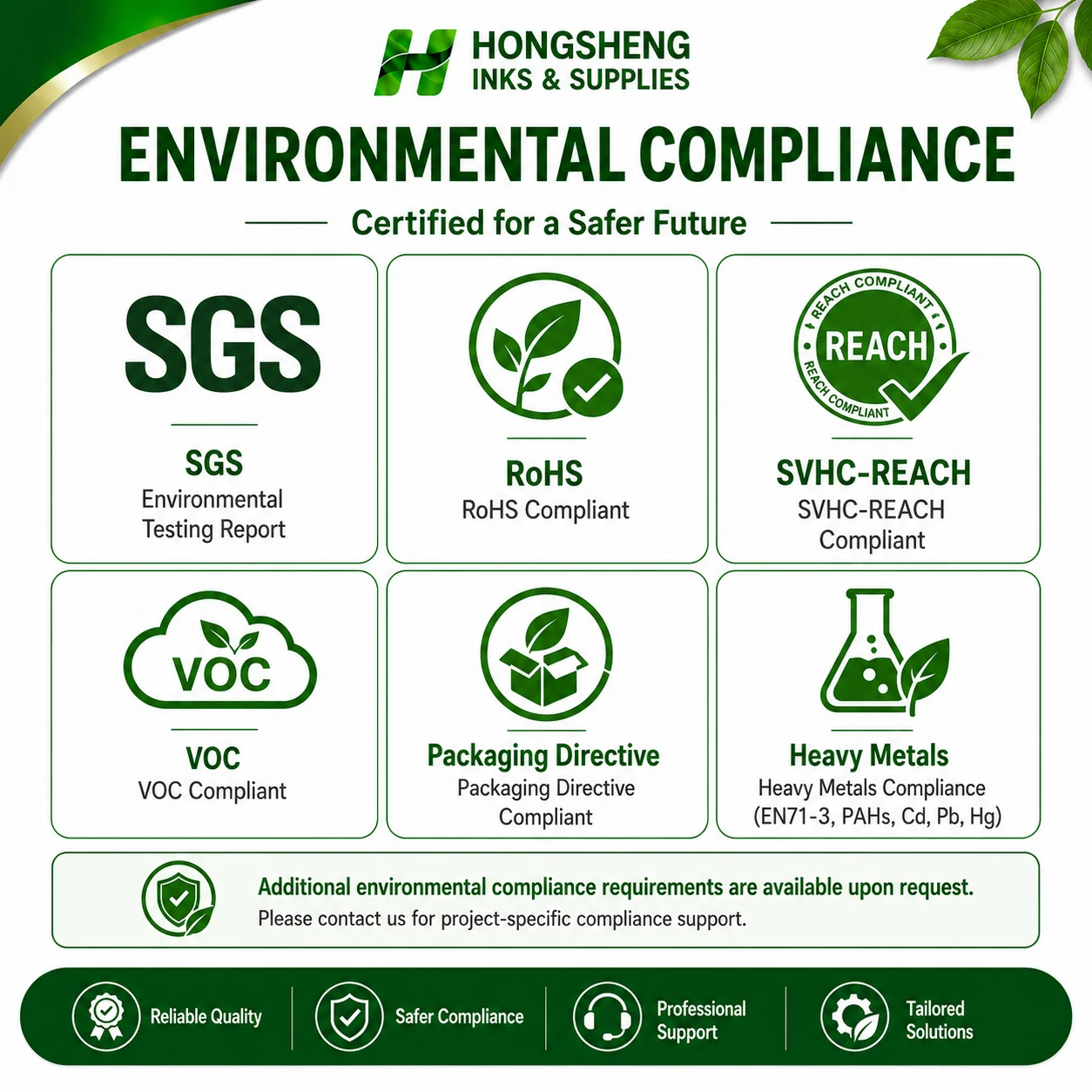
Hongsheng product compliance documentation scope

COMPLIANCE & DOCUMENTATION

Product documentation scope

The available documentation scope for this product includes the items shown below. Please identify the required color and destination market when requesting the applicable report.

  • Standard colors can be supplied to meet applicable RoHS, REACH, PAHs and EN 71-3 requirements.
  • Halogen-related and other regulatory claims must be confirmed against the current report for the selected color and target market.
Request Compliance Documents

TECHNICAL & CUSTOMIZATION SUPPORT

Support around the substrate, color and printing process

Custom Color Matching

Match the required appearance using the confirmed substrate and reference.

Formula Adjustment

Review adhesion, drying and resistance requirements together.

Compatibility Testing

Evaluate the actual substrate, treatment and printing conditions.

Printing Troubleshooting

Review leveling, edge definition, adhesion and drying issues.

Discuss Your Application

WHY CHOOSE HONGSHENG

Focused support for industrial printing projects

Customized formulationSubstrate testing supportFlexible packaging supportConsistent product performance
Learn More About Hongsheng →