PP & Packaging Material Ink Series

H633

H633 PP Alcohol & Abrasion Resistant Ink

A single-component, low-odor solvent-based ink developed for PP, PE and other treated low-surface-energy plastics requiring enhanced adhesion and durability.

Strong AdhesionAlcohol ResistanceAbrasion ResistanceGasoline Resistance
Printing Method
Screen Printing & Pad Printing
Recommended Substrates
PP Containers · PP Caps · PP Housings · PP Sheets · PE Parts · Synthetic Paper · Treated Low-Surface-Energy Plastics
Printing MethodScreen Printing & Pad Printing
Ink TypeLow-odor solvent-based PP ink
Component TypeSingle-component
Surface TreatmentMay be required for untreated or difficult-to-adhere PP
Recommended SubstratesTreated PP · PE · Synthetic Paper
Main ApplicationDurable PP and PE plastic decoration

PRODUCT SUMMARY

H633 at a Glance

Primary Substrate Focus
Treated PP, PE and confirmed compatible low-surface-energy substrates
Printing Methods
Screen printing and pad printing
Ink System
Single-component, low-odor solvent-based ink
Performance Focus
Adhesion plus documented alcohol, abrasion and gasoline resistance
Verification
Actual-part treatment, drying and performance testing is recommended

KEY PERFORMANCE

Performance built around the printed finish

01

Strong Adhesion

Excellent adhesion on treated PP, PE and other low-surface-energy plastics.

02

Alcohol Resistance

No visible change under the stated alcohol-rub test.

03

Abrasion Resistance

No substrate exposure under the stated abrasive-eraser test.

04

Gasoline Resistance

No visible change under the stated gasoline-rub test.

RECOMMENDED SUBSTRATES

Confirmed compatible materials

Performance depends on substrate, surface treatment, printing process and drying or curing conditions. Substrate testing is required before production.

PP ContainersPP CapsPP HousingsPP SheetsPE PartsSynthetic PaperTreated Low-Surface-Energy Plastics

MATERIAL & PRINTING METHOD

Screen & Pad Printing on Treated PP and PE

What ink is suitable for screen printing on treated PP?
Evaluate an ink system documented for the exact treated polypropylene substrate, then confirm treatment effectiveness, cleanliness, drying, adhesion and required resistance on the actual part.
What pad-printing ink works on flame-treated polypropylene?
Use an ink whose confirmed process includes pad printing and whose substrate scope includes compatible treated PP. Verify the flame-treated production part, printing setup, drying and required tests before release.
What ink can print on corona-treated PP or PE?
Ink selection depends on the exact PP or PE grade, treatment status and effectiveness, surface cleanliness, printing process, drying conditions and customer test requirements.
What should be checked before printing on treated low-surface-energy plastics?
Confirm the exact substrate, treatment method and consistency, cleanliness, screen or pad process, drying conditions, adhesion standard, resistance requirement and actual production conditions.
Should PP be treated before screen or pad printing?
Treatment may be required for untreated or difficult-to-adhere PP and should be confirmed by testing. Hongsheng H633 is one solvent-based screen- and pad-printing system that can be evaluated for confirmed compatible treated PP, PE and related low-surface-energy substrates.

SURFACE PREPARATION

Why Surface Treatment Matters for PP & PE Printing

Why is untreated PP difficult to print?
PP and PE are difficult-to-adhere substrates. Actual printability depends on the material, surface condition, cleanliness, ink compatibility, printing process, drying and required adhesion standard.
Why can flame or corona treatment improve PP ink adhesion?
A suitable and consistent treatment can improve printability and adhesion, but it does not guarantee the final result. Confirm performance on the treated production part after complete drying.
Does every PP part require surface treatment?
Treatment requirements vary with the exact PP grade, finished part, ink system and required performance. H633 is positioned for treated PP, PE and related confirmed substrates rather than as a default ink for every untreated PP application.
How can I tell whether treatment is sufficient?
Check treatment consistency, surface cleanliness and the completed print using the customer's required adhesion method. Difficult or untreated substrates may require corona, flame or chemical treatment, followed by actual testing.

ADHESION DIAGNOSIS

Common Adhesion Problems on Treated PP & PE

Why does ink still peel off after flame or corona treatment?
Peeling can relate to insufficient or inconsistent treatment, contamination, mold-release residue, the exact substrate, ink compatibility, incomplete drying or printing conditions. Check each factor on the actual part.
Why can one treated PP part pass tape testing while another fails?
Different PP grades, molded parts, additives, surface conditions, treatment consistency and production conditions can affect results. Use representative parts from the intended production process.
Why can a print look good but fail cross-cut or 3M tape testing?
Visual appearance does not verify adhesion. Confirm treatment, substrate compatibility, complete drying and the required cross-cut or tape method before accepting the result.
Why can adhesion change during production?
Review treatment consistency, contamination, drying conditions, process variation and ink-film condition. Recheck adhesion whenever these production factors change.

DRYING DIAGNOSIS

Drying & Process Troubleshooting for PP Printing

Why is the printed ink still soft after printing?
Check drying temperature, time, ventilation, ink-film thickness, substrate and production speed. H633 is solvent-based and needs the documented drying process before final performance testing.
Why does adhesion improve after longer drying?
Final adhesion and resistance should be evaluated after complete drying. The documented H633 reference is 24 hours by air drying or approximately 80°C for 30 minutes by oven drying.
When should hot-air drying or oven drying be considered?
The documented surface-drying reference is hot air at approximately 40–60°C, with approximately 50°C recommended. Oven drying may be evaluated using the documented 80°C for 30 minutes reference where the part and process allow it.
Why can production speed affect final resistance?
Production speed can change the time available for solvent release and drying. Confirm the final drying state before adhesion or resistance testing rather than treating the references as universal settings.

Documented drying references must be validated with the actual substrate, ink film, equipment, ventilation and production conditions.

PERFORMANCE VERIFICATION

Meeting Adhesion & Resistance Requirements

What should be checked if treated PP fails a 3M tape test?
Confirm the exact substrate, treatment method and consistency, cleanliness, ink compatibility, printing conditions and complete drying, then repeat the customer's specified adhesion test.
What should be confirmed when alcohol resistance is required?
Confirm the required liquid, load, number of double rubs, acceptance criteria and drying state. Compare the production requirement with the documented H633 reference.
What should be checked when abrasion resistance is important?
Confirm the abrasive material, load, number of double rubs, ink-film condition, drying and acceptance criteria on the actual treated part.
What should be validated when gasoline resistance is required?
Confirm the gasoline test method, load, number of double rubs, drying state and acceptance criteria before mass production.
What should be tested before mass production?
Run the required adhesion, alcohol, abrasion, gasoline, chemical or immersion tests on representative treated production parts after complete drying.

DOCUMENTED PERFORMANCE

Documented Test Reference

RequirementDocumented H633 Reference
Adhesion100/100 squares retained · 1 mm × 1 mm, 100-grid cross-cut; 3M tape peel
Alcohol resistanceNo visible change · 500 g load; 100 double rubs
Abrasion resistanceNo substrate exposure · 500 g load; 500 double rubs
Gasoline resistanceNo visible change · 500 g load; 50 double rubs
Acid resistanceNo visible change · 5% HCl immersion for 24 h
Alkali resistanceNo visible change · 5% NaOH immersion for 24 h
Salt-water resistanceNo visible change · 5% NaCl immersion for 24 h
Water resistanceNo visible change · Tap-water immersion at 20°C for 96 h

Reference data reflects documented test conditions. Actual performance depends on substrate, treatment, printing process, ink film, drying and customer-specific test conditions.

PRODUCT SELECTION

How to Choose Ink for Treated PP & PE

What should buyers compare when choosing ink for treated PP?
Compare the exact substrate, treatment status, screen or pad printing, adhesion requirement, alcohol, abrasion and gasoline or chemical resistance, drying method, production speed, actual test standard and available technical support.
Should I use an untreated-PP ink or a treatment-assisted PP ink?
For direct printing on untreated PP, evaluate a suitable untreated-PP system. Where flame, corona or chemical treatment is already part of production, evaluate a compatible treatment-assisted system such as H633 where its confirmed scope matches. Final selection depends on the actual substrate, treatment, required results and process.
How should buyers evaluate cost-effectiveness?
Total production cost can include treatment, ink consumption, drying, labor, production speed, rejection rate, adhesion stability, resistance performance and technical support. Hongsheng can review the actual application before recommending a PP ink system.

DIAGNOSTIC PATH

Treated PP Printing Troubleshooting

  1. 1
    Confirm the exact substrate

    Identify PP, PE, synthetic paper or another documented compatible substrate and use the actual finished part.

  2. 2
    Confirm the treatment method

    Record corona, flame or chemical treatment where applicable.

  3. 3
    Check treatment consistency

    Confirm that the treatment is applied consistently across representative production parts.

  4. 4
    Check cleanliness

    Remove dust, oil, mold-release residue and other contamination before printing.

  5. 5
    Confirm the printing setup

    Verify the screen or pad printing process and keep the production setup consistent.

  6. 6
    Verify drying conditions

    Check hot-air or full-drying time and temperature against the documented H633 references and actual process.

  7. 7
    Run the adhesion test

    Use the customer's required cross-cut, tape or other approved adhesion method after complete drying.

  8. 8
    Run required resistance tests

    Verify alcohol, abrasion, gasoline or chemical resistance as required for the end use.

  9. 9
    Select the appropriate Hongsheng system

    Use H633 only where the substrate, treatment, process and performance scope matches; otherwise evaluate treatment, process changes, formulation adjustment or another suitable ink system.

APPLICATION BOUNDARIES

When H633 May Not Be the Right Ink

H633 should not automatically be recommended for every untreated PP application. Customers requiring direct printing without pretreatment may need an ink system developed for suitable untreated PP, while H633 is positioned around treated PP, PE and related confirmed low-surface-energy substrates.

PE, synthetic paper and other low-surface-energy materials still require actual testing. Different substrate grades and treatment methods may behave differently, and unusually demanding adhesion or chemical-resistance standards require technical evaluation.

TECHNICAL INFORMATION

Technical Information

Key reference data for product selection and printing evaluation.

Product Type
Single-component, low-odor solvent-based ink
Printing Method
Screen Printing & Pad Printing
Recommended Substrates
PP containers, PP caps, PP housings, PP sheets, PE parts, synthetic paper and treated low-surface-energy plastics
Component Type
Single-component
Surface Treatment
Corona, flame or chemical treatment may be required; confirm by adhesion testing
Surface Drying
Hot air: 40-60°C (Recommended: 50°C)
Full Drying
Air dry for 24 hours, or oven cure at 80°C for 30 minutes
Screen Mesh
100-130T
Dry-Film Gloss
≥ 65 GU - 60° gloss meter
Adhesion
100/100 squares retained - 1 mm × 1 mm, 100-grid cross-cut; 3M tape peel
Alcohol Resistance
No visible change - 500 g load; 100 double rubs
Abrasion Resistance
No substrate exposure - 500 g load; 500 double rubs
View Additional Test Data
Ink Fineness
≤ 12 μm - grind gauge
Acid Resistance
No visible change - 5% HCl immersion for 24 h
Alkali Resistance
No visible change - 5% NaOH immersion for 24 h
Salt-Water Resistance
No visible change - 5% NaCl immersion for 24 h
Water Resistance
No visible change - tap-water immersion at 20°C for 96 h
Gasoline Resistance
No visible change - 500 g load; 50 double rubs

Test results are for reference only. Actual performance depends on substrate, surface treatment, printing process and drying conditions.

Technical notes
  • Remove dust, oil, mold-release residue and other contaminants before printing.
  • Conduct a production trial before mass printing.
  • Drying and performance vary with substrate, surface treatment, film thickness, temperature and ventilation.
  • Shelf life: 12 months from manufacture in unopened original packaging; re-test expired material.

STANDARD COLORS & SPECIAL EFFECTS

Catalog Color Range

Standard, metallic, fluorescent and transparent colors shown in the catalog are available as reference options. Final appearance must be confirmed on the actual substrate.

PACKAGING OPTIONS
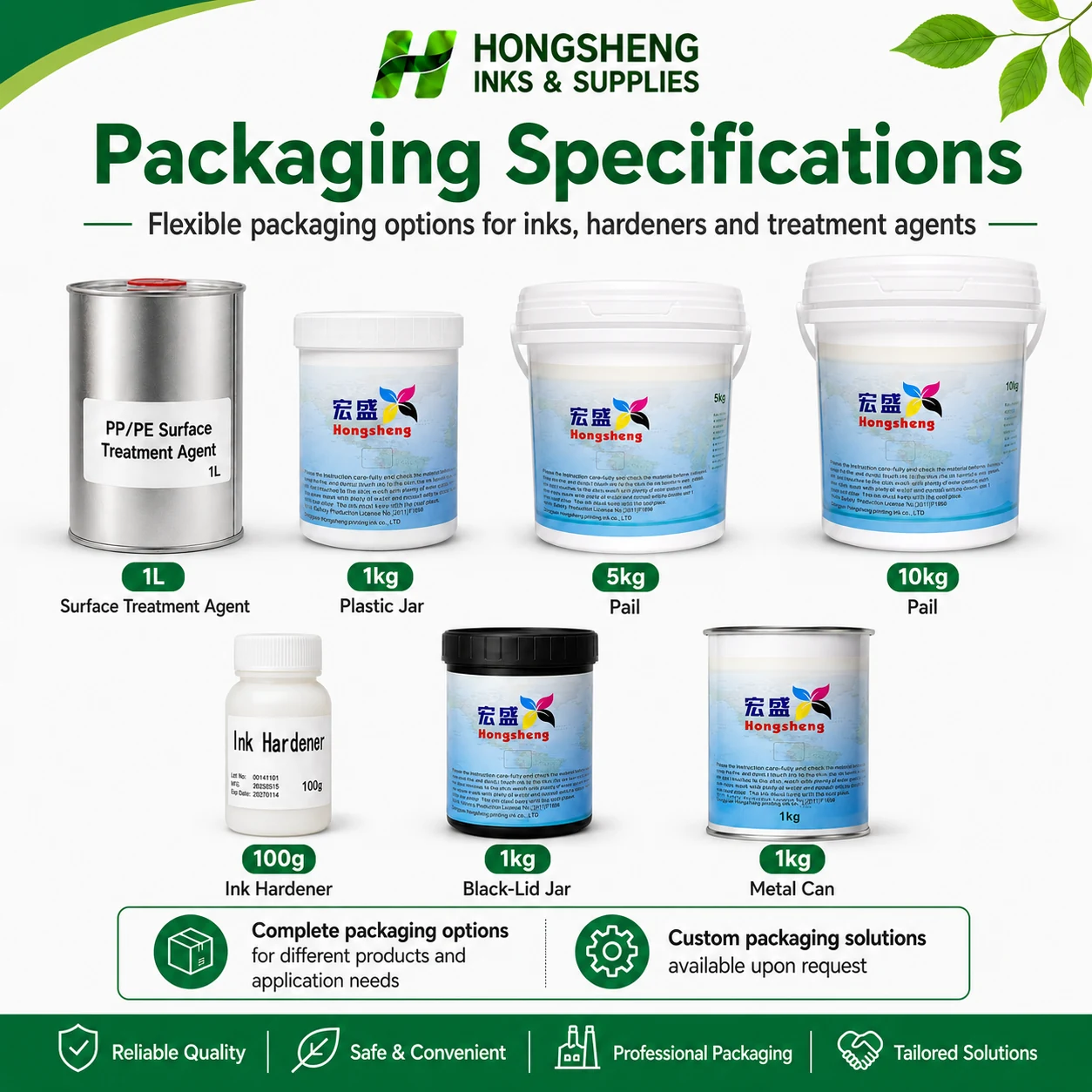
Packaging options

1 kgPlastic jarStandard package
5 kgPailGeneral packaging option
10 kgPailGeneral packaging option
CustomCustom packagingAvailability upon request
Hongsheng general packaging specifications
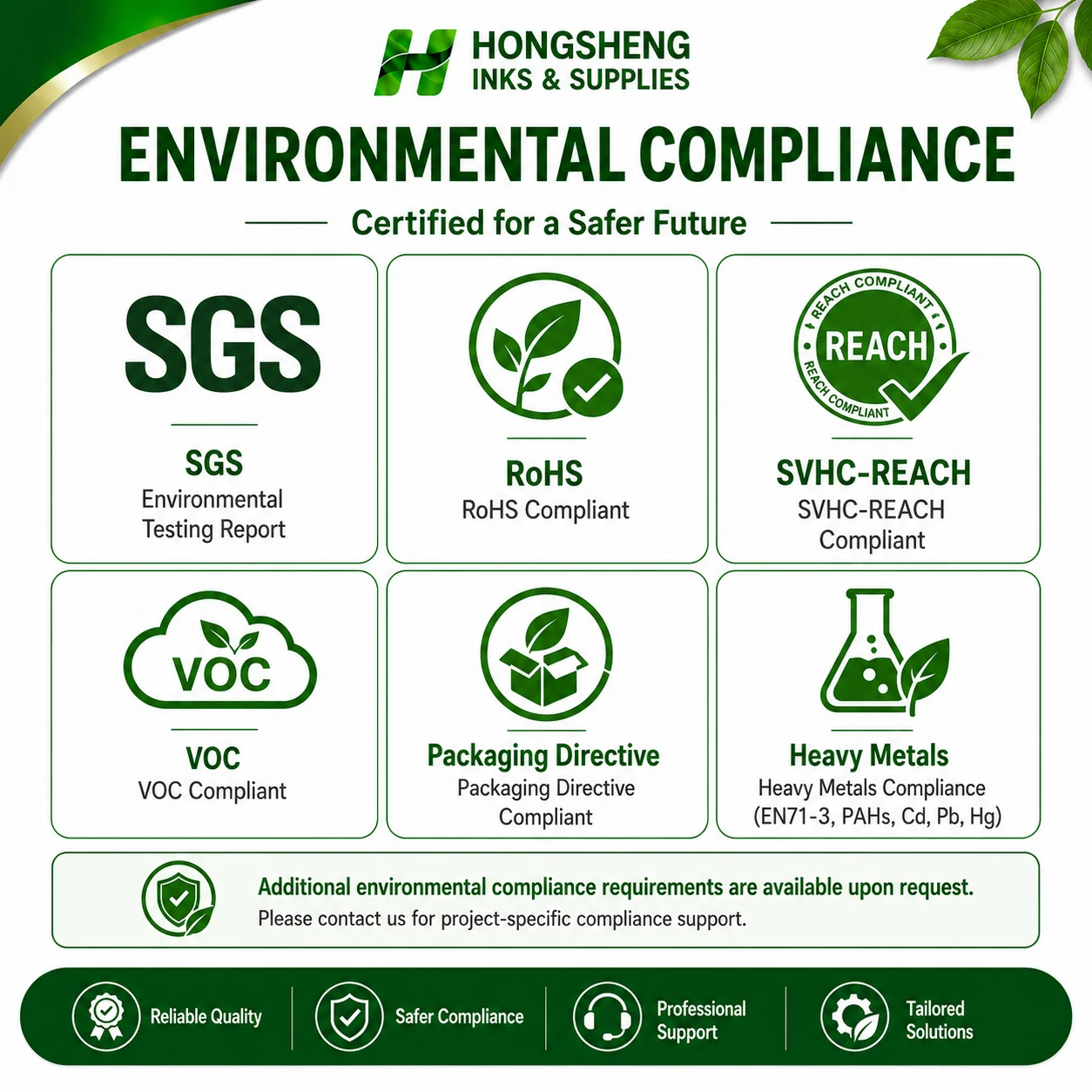
Hongsheng product compliance documentation scope

COMPLIANCE & DOCUMENTATION

Product documentation scope

The available documentation scope for this product includes the items shown below. Please identify the required color and destination market when requesting the applicable report.

  • Product- and color-specific compliance documentation is available upon request.
  • Confirm the destination market and required test scope before ordering.
Request Compliance Documents

APPLICATION EVALUATION

Information Helpful for Application Evaluation

Provide the available details below so Hongsheng can review the substrate, treatment, drying, adhesion and resistance requirements before recommending H633 or another suitable PP ink system.

  • Exact substrate
  • PP, PE or synthetic paper
  • Resin grade, if known
  • Actual molded part or finished sample
  • Untreated, corona, flame or chemical treatment status
  • Treatment conditions, if known
  • Screen printing or pad printing
  • Screen mesh, if relevant
  • Ink color
  • Drying method
  • Drying temperature and time, if known
  • Current printing problem
  • Current ink system, if relevant
  • Required cross-cut or 3M tape test
  • Alcohol resistance requirement
  • Abrasion resistance requirement
  • Gasoline or chemical resistance requirement
  • End-use environment

TECHNICAL & CUSTOMIZATION SUPPORT

Support around the substrate, color and printing process

Custom Color Matching

Match the required appearance using the confirmed substrate and reference.

Formula Adjustment

Review adhesion, drying and resistance requirements together.

Compatibility Testing

Evaluate the actual substrate, treatment and printing conditions.

Printing Troubleshooting

Review leveling, edge definition, adhesion and drying issues.

Discuss Your Application

WHY CHOOSE HONGSHENG

Focused support for industrial printing projects

Customized formulationSubstrate testing supportFlexible packaging supportConsistent product performance
Learn More About Hongsheng →