When screen printing or pad printing on PP cosmetic bottles, manufacturers sometimes encounter a frustrating problem:
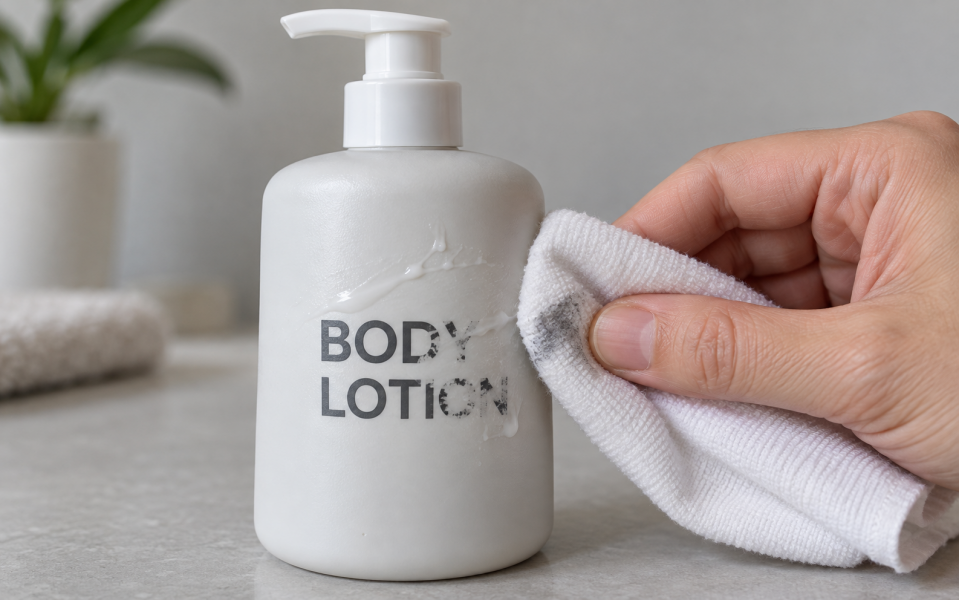
The ink appears to have good adhesion to the bottle surface and does not easily come off during dry rubbing. However, after coming into contact with lotion, face cream or other skincare products, the printed graphics may become smeared, discolored or even partially peel off when wiped by hand or with a tissue.
This problem is not necessarily caused by poor adhesion to the PP substrate. In many cases, it may be related to the chemical resistance of the ink film.
1. Why Can Lotions and Creams Affect Printed Ink?
Many people assume that lotions and creams are less aggressive than solvents such as alcohol or gasoline, so they should not significantly affect printed ink.
However, cosmetic formulations can be quite complex.
Lotions, face creams and sunscreens may contain mineral oils, esters, silicones, emulsifiers and other functional ingredients.
Some of these ingredients may interact with the resin system of the ink.
When these substances come into contact with the printed ink film, they may cause softening, swelling or a reduction in surface abrasion resistance.
This is one reason why ink that initially passes a dry-rubbing test may become easier to remove after contact with lotion or cream.
During everyday use, cosmetic packaging may repeatedly come into contact with skincare products, creams and alcohol-based substances. This places higher demands on the chemical resistance and durability of the printed ink.
2. Why Do Some PP Inks Resist Cream While Others Do Not?
The key factors include the ink's resin system and the performance of the cured ink film.
PP (polypropylene) is a low-surface-energy plastic, which makes ink adhesion more challenging.
Therefore, PP-specific inks must first provide suitable adhesion to the substrate.
However, ink adhesion and chemical resistance are two different performance properties.
Some PP inks can achieve direct adhesion on untreated PP surfaces, but their ink films may have limited resistance to certain oils, lotions or cosmetic ingredients.
If these substances soften the ink film, printed graphics may become easier to rub off, even when the initial adhesion is satisfactory.
For cosmetic bottles and lotion containers, ink selection should therefore consider more than just adhesion. Resistance to creams, oils, alcohol and other chemicals is also important.
Proper ink drying and curing are equally important. Testing before the ink has fully cured may also lead to unsatisfactory results.
3. How Can You Prevent Ink from Rubbing Off PP Cosmetic Bottles?
For PP cosmetic packaging that frequently comes into contact with creams, lotions and alcohol, it is important to select a specialized ink that combines good substrate adhesion with chemical resistance.
Rather than focusing only on initial adhesion, manufacturers should consider the overall durability of the printed ink film.
Hongsheng offers a no-treatment, chemical-resistant PP printing ink developed for PP substrates requiring reliable adhesion and resistance to creams and other chemicals.
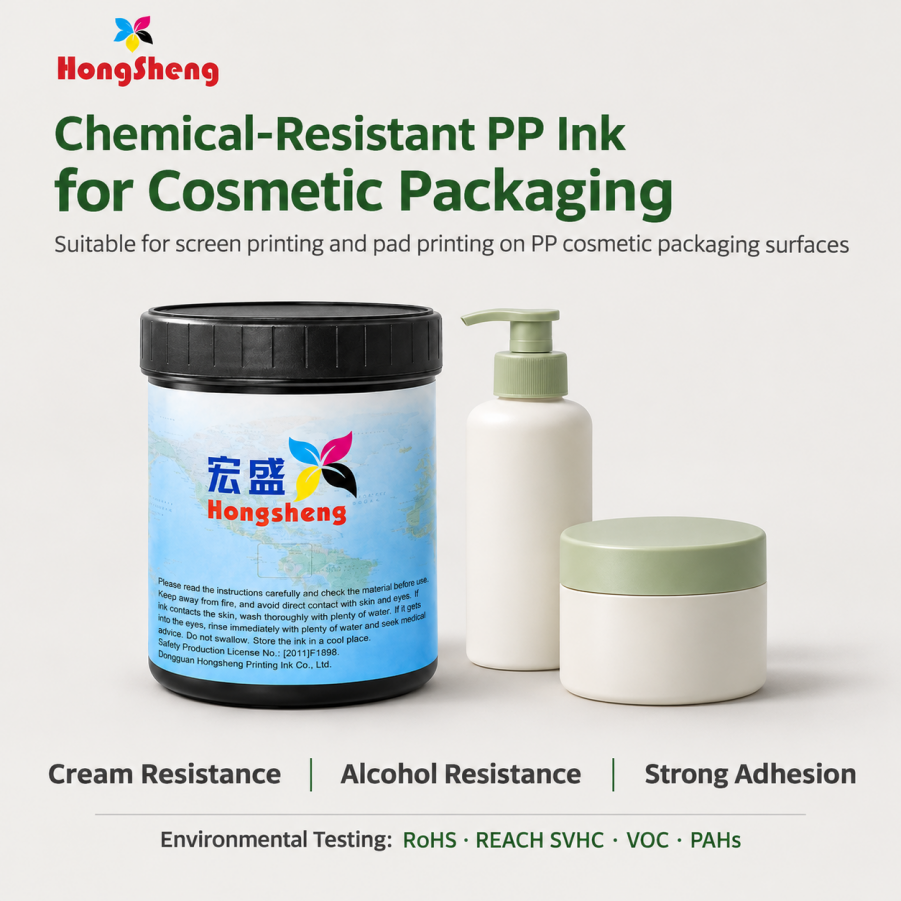
Key Product Features
Direct Printing on Compatible Untreated PP Substrates
Designed for suitable PP materials, the ink can be applied directly without additional flame, corona or plasma treatment, helping reduce pretreatment steps in the printing process.
Resistance to Creams, Alcohol and Chemicals
Designed to provide improved resistance to creams, oils, alcohol and selected chemicals commonly encountered in cosmetic packaging applications.
This helps reduce the risk of ink softening, discoloration and rubbing off after contact with cosmetic products.
Reliable Adhesion
Combines PP substrate adhesion with ink film durability, making it suitable for cosmetic packaging applications where consistent print quality and resistance to rubbing are required.
Temperature Resistance Evaluation
Temperature resistance can be evaluated according to specific customer requirements and application conditions.
Recommended Applications
- PP cosmetic bottles
- PP lotion bottles
- PP cream jars
- PP cosmetic caps
- Other PP plastic packaging components
Suitable for both screen printing and pad printing applications.
4. What Should Be Considered During Application Testing?
Different cosmetic formulations can have significantly different effects on printed ink films.
For example, ordinary moisturizing lotions, sunscreens and oil-rich creams may present different chemical resistance requirements.
Before mass production, it is recommended to test the ink using the actual PP packaging material and cosmetic contents.
Important testing considerations include:
- Resistance to lotion and cream contact followed by rubbing.
- Resistance to alcohol and other specified chemicals.
- Adhesion performance through tape and cross-hatch testing.
- Ink film condition and adhesion after high- and low-temperature testing.
Test conditions, including contact time, exposure conditions and wiping method, should be defined according to the actual application requirements.
The ink should be fully dried or cured according to its technical requirements before performance testing.
5. Conclusion
For PP cosmetic packaging, good printing performance is not simply about making the ink adhere firmly to the bottle surface.
The printed graphics must also withstand contact with lotions, creams and other chemicals during everyday use.
For PP packaging experiencing ink rubbing off after contact with creams, lotions or alcohol, Hongsheng's no-treatment, chemical-resistant PP ink offers a practical printing solution.
By combining PP adhesion with resistance to creams, alcohol and selected chemicals, it helps improve the durability of printed graphics on cosmetic packaging.