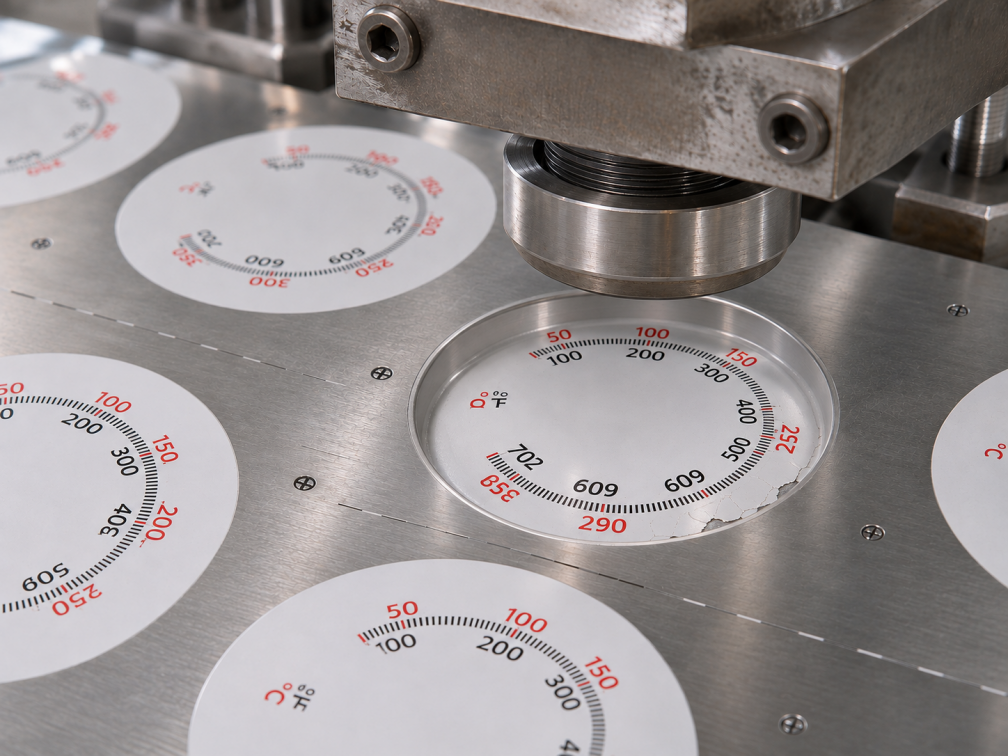
In some aluminum component manufacturing processes, metal sheets are screen-printed first and formed afterward. Printed scales, lettering, and decorative graphics may then undergo punching, bending, embossing, or local drawing during stamping. A print that looks sound on a flat sheet may crack, lift, or scratch once the metal is deformed.
The central issue is that flat-sheet adhesion, resistance to mechanical forming, and heat stability are different performance requirements. An ink intended for print-before-stamping applications must be evaluated against all three using the actual aluminum material and production process.
1. Why Can Ink Fail After Metal Stamping?
Stamping imposes localized bending, stretching, compression, and tool contact on the printed surface. Different failure patterns point to different possible causes.
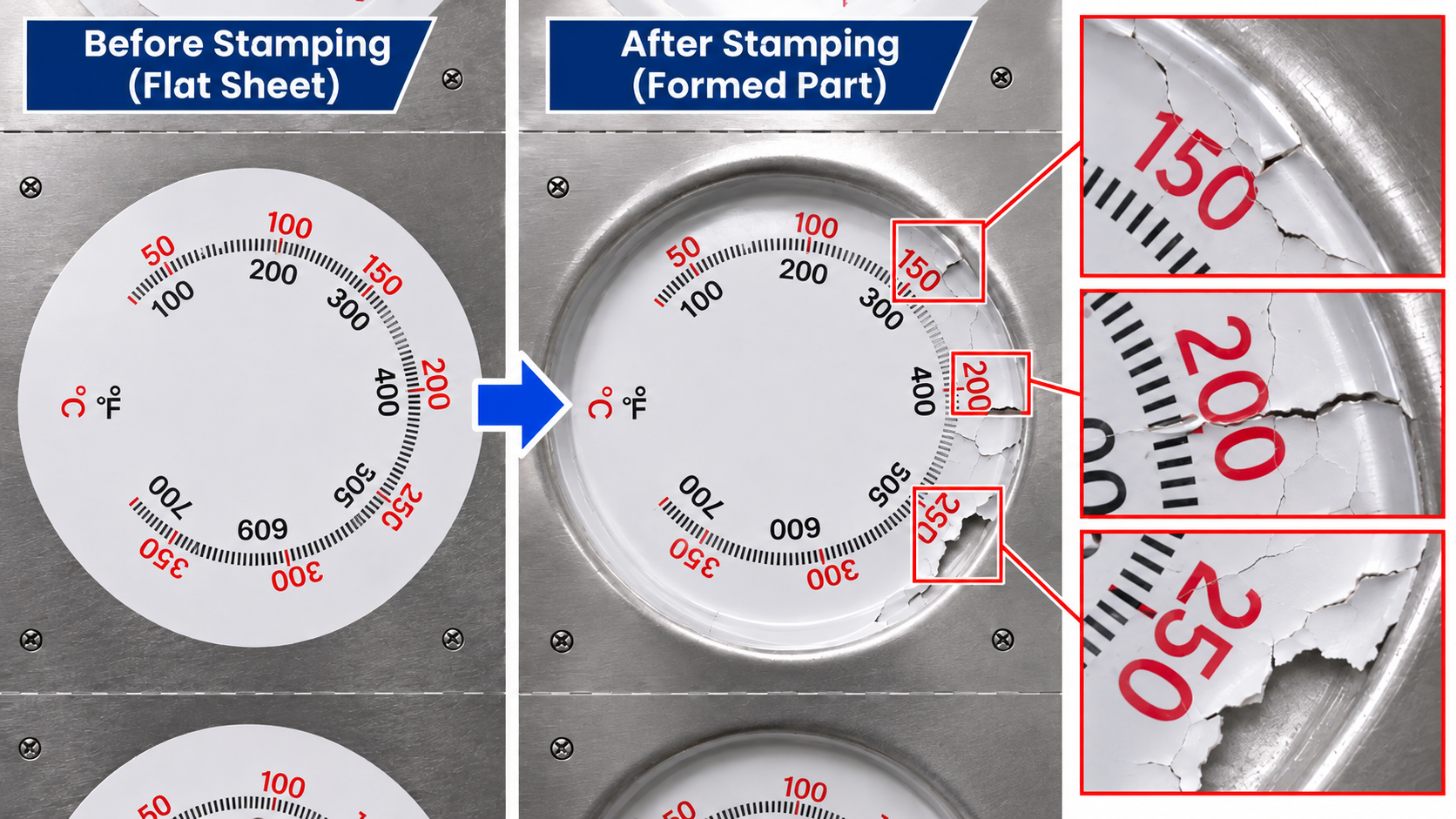
1.1 Ink film cracking after stamping
As an aluminum sheet bends or is embossed, the printed film must accommodate substrate deformation. A film whose flexibility is insufficient for the local strain can develop hairline cracks, especially near tight radii or drawn corners.
1.2 Localized peeling or ink loss
A printed film may adhere to a flat aluminum sheet but detach around a punched edge or formed corner. Local stress, the metal surface condition, and ink–substrate compatibility can all contribute.
1.3 Scratches or abrasion during forming
When a printed area contacts the die or slides against tooling, the ink may be scratched even if its adhesion is otherwise satisfactory. Tool contact and surface friction should be evaluated separately from basic adhesion.
1.4 Yellowing or gloss loss after heat exposure
Where manufacturing includes a separate high-temperature step, an ink system also needs adequate thermal stability. Heat-related yellowing, color shift, or loss of gloss are appearance failures distinct from mechanical cracking.
2. Why Can a Flat-Sheet Adhesion Test Pass While Stamping Still Fails?
An adhesion test indicates how the ink bonds to the surface under the selected test conditions. It does not reproduce the local stretching, bending, friction, and compression of a forming operation. For print-before-stamping projects, these properties must be assessed together:
- Metal surface: aluminum alloy, oxide layer, rolling oil, coating, and cleaning condition can affect ink bonding.
- Ink-film properties: the cured film must have a suitable balance of adhesion, flexibility, and resistance to tool contact.
- Geometry and forming severity: sheet thickness, bend radius, emboss depth, and die contact influence the local demand on the ink film.
- Heat exposure: thermal stability and gloss retention must be tested at the specified temperature and exposure duration.
A good cross-hatch or tape test is useful before stamping, but it should not be treated as proof that printing will remain intact after forming.
3. How Do Drying and Curing Conditions Affect Stamping Performance?
Ink-film behavior depends partly on the state of drying or curing when the metal enters the stamping process. Inadequate drying or cure can leave a film vulnerable to marking, transfer, or damage; an unsuitable cure schedule can also change film properties. The outcome depends on the specific ink system.
For reliable evaluation, manufacturers should record the coating or print thickness, drying/curing method, temperature, duration, and interval before stamping. Test on production-equivalent printed aluminum, using the actual cure schedule rather than a laboratory shortcut.
Do not assume that longer curing automatically improves stamping resistance. The correct process window must be established for the selected ink and aluminum substrate.
4. Hongsheng's Stamping-Resistant Ink Solution for Aluminum
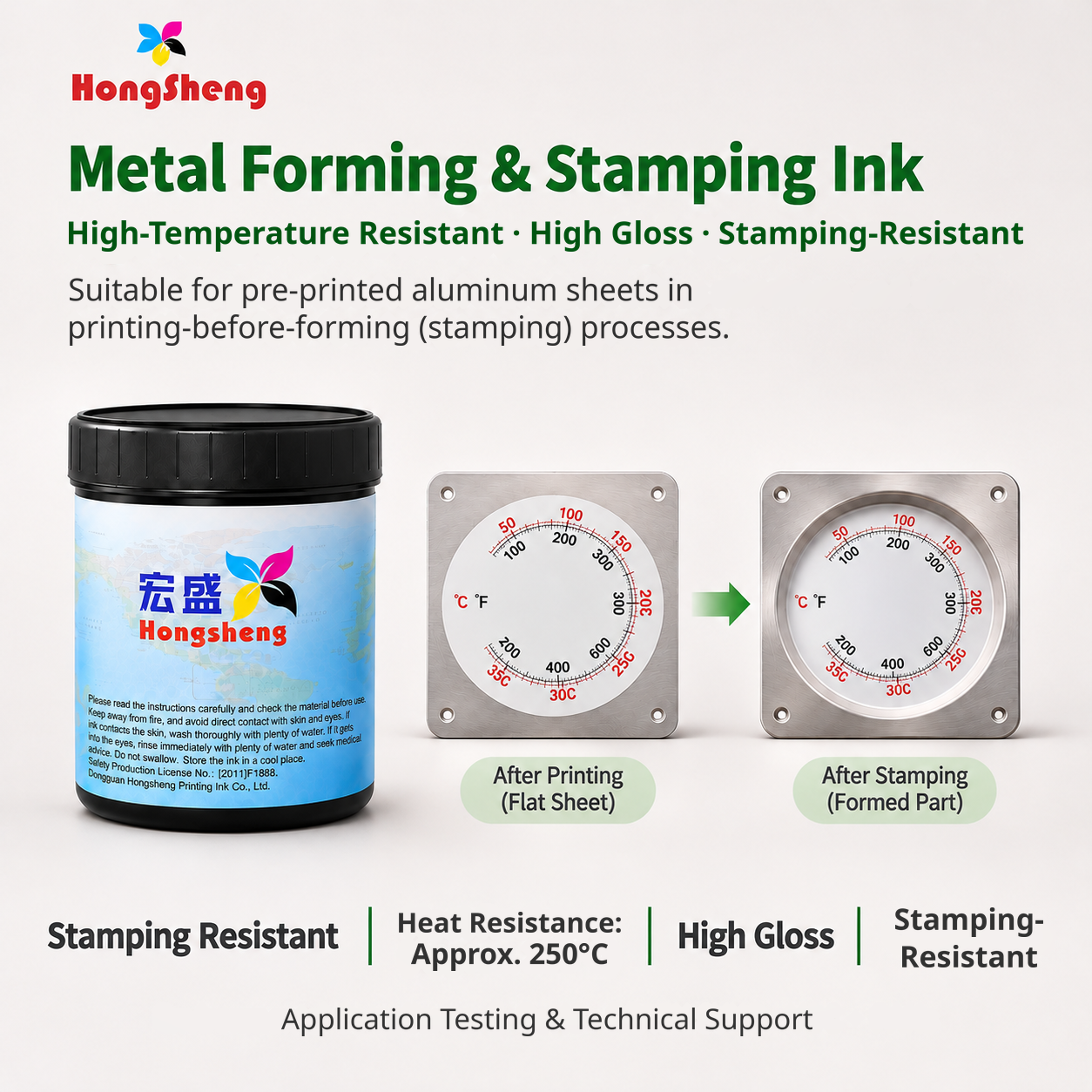
Hongsheng provides a specialized metal printing ink solution for aluminum sheets that are printed before stamping. The formulation has been evaluated for stamping on aluminum and is intended to help maintain printed graphics through suitable forming operations while retaining a high-gloss appearance.
Hongsheng H92 has been used in a customer application involving printing before aluminum stamping. Under the evaluated processing conditions, the ink met the customer's stamping-resistance requirements while maintaining good color stability and high gloss.
4.1 Aluminum stamping resistance
The evaluated application involves printed aluminum sheets subjected to subsequent stamping. Ink adhesion and film flexibility are important to reducing the risk of cracking or local lifting under the tested forming conditions. Results must be confirmed for each alloy, geometry, and tool setup.
4.2 Approximately 250°C heat resistance in the customer process
The ink has been tested against a customer-specific process requirement of approximately 250°C. Under those evaluated conditions, the printed appearance maintained good color stability without noticeable yellowing and retained a high-gloss finish. The exposure duration and exact heating profile are not specified here; this is not a claim of indefinite continuous service at 250°C.
4.3 High-gloss printed appearance
The ink is designed to produce a glossy decorative finish. Gloss and color should be checked both before and after the actual forming and any required heating steps, using the customer’s agreed acceptance criteria.
4.4 Steel and other metals require separate assessment
Stamping resistance has been evaluated on aluminum, not steel. Suitability for steel, coated metals, or alternative metal substrates remains an application-development question and requires separate material and process testing. Hongsheng can assess custom color, adhesion, curing, and performance requirements for such projects.
5. Typical Print-Before-Stamping Applications
The following examples describe potential use cases where printing takes place before aluminum forming. They are application directions, not claims that every listed part has already been validated with this ink.
| Application direction | Typical printing and forming requirement |
|---|---|
| Metal dials and scale plates | Printed graduations or graphics followed by local forming or embossing. |
| Aluminum decorative panels | Visible artwork combined with bends, recesses, or shaped edges. |
| Small-appliance metal panels | Printed controls or appearance details on formed aluminum parts. |
| Industrial marking plates | Printed legends on aluminum sheets that are subsequently punched or shaped. |
| Automotive decorative components | Case-by-case evaluation of printed aluminum components and forming severity. |
6. How to Test Ink Before and After Aluminum Stamping
A practical qualification plan should reproduce the customer’s actual aluminum substrate and manufacturing sequence. The following checks can help identify where failure occurs:
| Stage | What to inspect or record |
|---|---|
| Before printing | Aluminum grade, thickness, surface coating or oxide, oil/cleaning condition, print location. |
| After printing and cure | Ink appearance, adhesion, film thickness where relevant, cure schedule, initial color and gloss. |
| After stamping | Cracks at bends or drawn areas, edge lifting, transfer to tooling, scratches, damaged graphics. |
| After required heat exposure | Specified temperature and time, yellowing or color shift, gloss change, subsequent adhesion. |
| Final acceptance | Compare to the customer’s agreed visual and performance criteria, including relevant abrasion checks. |
The same printed part may behave differently with a new tool radius, aluminum temper, cure schedule, or surface treatment. Approval should therefore be based on representative production parts, not a flat-sheet result alone.
7. Frequently Asked Questions
Can aluminum sheets be screen-printed before stamping?
Yes. Print-before-stamping is feasible when the ink, aluminum substrate, cure schedule, and forming geometry are compatible. The finished part should be tested after the actual stamping operation.
Why does ink crack after stamping even when adhesion is good?
Flat-surface adhesion does not measure how well a cured ink film accommodates deformation. Insufficient film flexibility, severe local strain, or tool contact may lead to cracks or damage.
What type of ink is suitable for printing before aluminum forming?
A stamping-resistant metal ink should be assessed for aluminum adhesion, flexibility after cure, resistance to tooling damage, and any required appearance or thermal properties. Selection should follow trials on the real part.
Can stamping-resistant ink withstand 250°C?
Some formulations can meet a defined heat-processing requirement. Hongsheng’s evaluated aluminum application involved approximately 250°C under the customer’s specified process, with no noticeable yellowing and a high-gloss appearance. It does not establish unlimited exposure time or performance for every metal.
Can the same ink be used on steel sheets?
Steel stamping performance has not been validated for this ink. Steel grades, surface conditions, curing, and forming parameters require separate compatibility and stamping tests.
How should stamping-resistant ink be tested before mass production?
Print and cure on production-equivalent aluminum, record initial adhesion and appearance, stamp with the intended tooling, and inspect formed regions. If the process includes heat, evaluate the defined time/temperature profile and compare final color and gloss to agreed criteria.
8. Conclusion
For aluminum sheets that are printed before stamping, successful performance depends on more than initial ink adhesion. The ink must suit the metal surface and curing process, accommodate the relevant forming operation, and—when required—maintain its appearance after defined heat exposure.
Hongsheng offers stamping-resistant metal ink solutions and technical support for aluminum print-before-stamping applications, with custom assessment for different material and performance requirements.