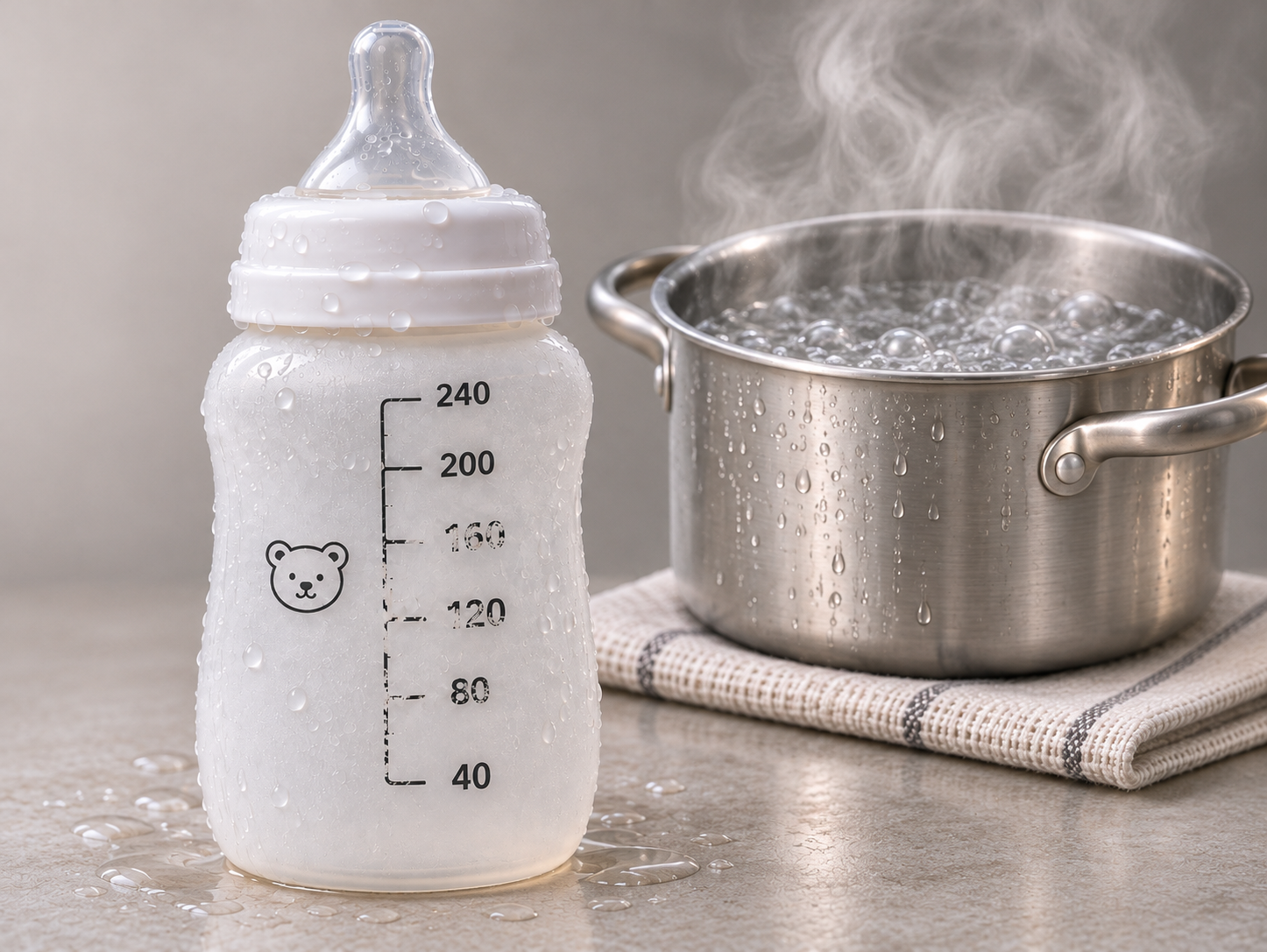
Printed graduations, text and graphics on polypropylene (PP) baby bottles need to remain legible during everyday handling and cleaning. However, some printed markings may fade, smear or peel after hot-water exposure, alcohol wiping or repeated friction.
This can happen because initial ink adhesion and the durability of the printed ink film are different performance properties. A print that appears firmly attached at room temperature may still require further evaluation for hot-water resistance, alcohol resistance and abrasion resistance.
1. Why Do PP Baby Bottle Printing Applications Require Specialized Ink?
PP (polypropylene) is a low-surface-energy plastic, which can make ink adhesion more challenging than printing on some other materials. Conventional inks may not develop sufficient adhesion on PP surfaces, so an ink formulated for PP substrates is important.
For baby bottle exterior printing, however, adhesion is only the starting point. The printed graduations, text and graphics may also encounter hot-water cleaning, alcohol wiping and repeated handling. The ink film therefore needs to be evaluated for the durability requirements of the intended application.
2. Four Key Performance Requirements for PP Baby Bottle Printing
Adhesion on PP Substrates
The ink must adhere reliably to the specific PP bottle material. Surface characteristics, material formulation and molding conditions can influence printing performance, so compatibility should be checked using the actual bottle.
Hot-Water Resistance
Exposure to hot water may affect the ink film or its bond to the PP substrate. If the ink system is not suitable for the required conditions, the printed area may blister, lose adhesion or peel. The required water temperature and exposure time should be defined by the customer's application.
Alcohol Resistance
Alcohol may interact with the resin system of some inks and may soften the ink film or reduce its resistance to wiping. Depending on the ink and test conditions, printed graduations and graphics may smear, fade or deteriorate.
Eraser Abrasion Resistance
Printed markings can be exposed to repeated friction during handling and cleaning. If the ink film does not have sufficient abrasion resistance, the graduations, text or graphics may gradually wear away.
Good initial adhesion does not automatically guarantee resistance to hot water, alcohol or repeated abrasion. These performance requirements should be evaluated separately.
Hongsheng No-Treatment PP Ink for Baby Bottle Exterior Printing
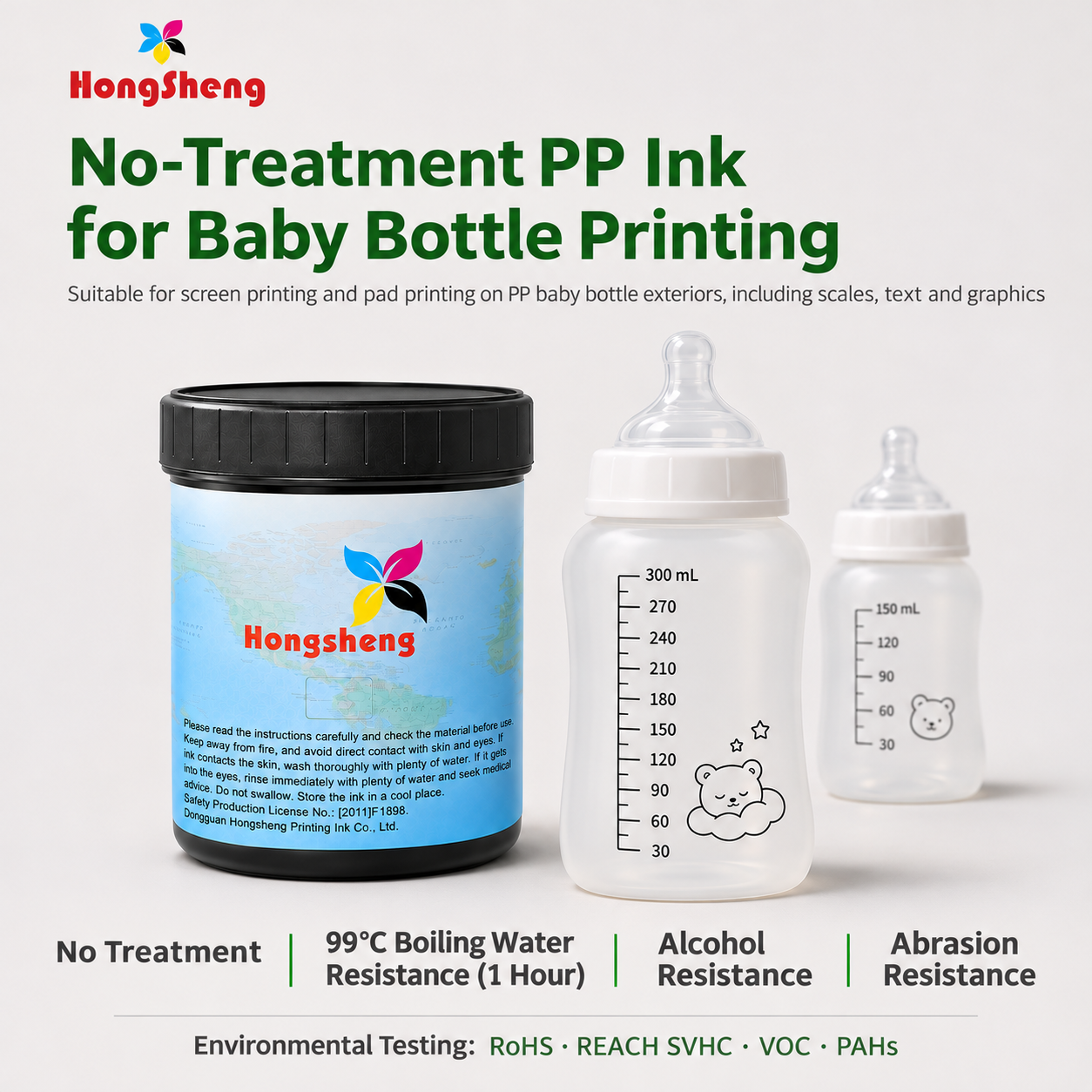
For PP baby bottle exterior printing, Hongsheng offers H633P, a specialized no-treatment PP ink designed for compatible PP substrates and applications requiring durable printed markings.
For compatible PP materials, the ink can be applied directly without additional flame or corona surface treatment, helping reduce extra surface-preparation steps in the printing process.
Key Performance Features
No-Treatment Adhesion
Designed for direct printing on compatible PP materials without additional flame, corona or other surface-activation treatment. Actual adhesion should be confirmed on the customer's bottle material.
Hot-Water Resistance
The ink has been evaluated for hot-water exposure at 99°C for 1 hour under the specified test conditions. For production approval, customers should confirm the test method and acceptance criteria against their own application requirements.
Alcohol Resistance
Designed for applications where printed markings may be exposed to alcohol wiping. The actual alcohol type, concentration, contact conditions and wiping method should be specified and verified during application testing.
Eraser Abrasion Resistance
Designed to provide abrasion resistance for printed graduations, text and graphics. The test method, applied pressure and number of rubbing cycles should be defined according to the customer's requirements.
The ink is suitable for evaluation in screen printing and pad printing applications on compatible PP baby bottle exteriors, including measurement graduations, text and decorative graphics.
4. How to Evaluate Printing Ink for PP Baby Bottles
PP formulations, bottle molding conditions and surface characteristics may vary. Even when using the same ink, actual results can differ depending on the substrate and printing process.
Before mass production, evaluate the ink on the actual PP bottle and under the intended use and cleaning conditions. A practical evaluation should include:
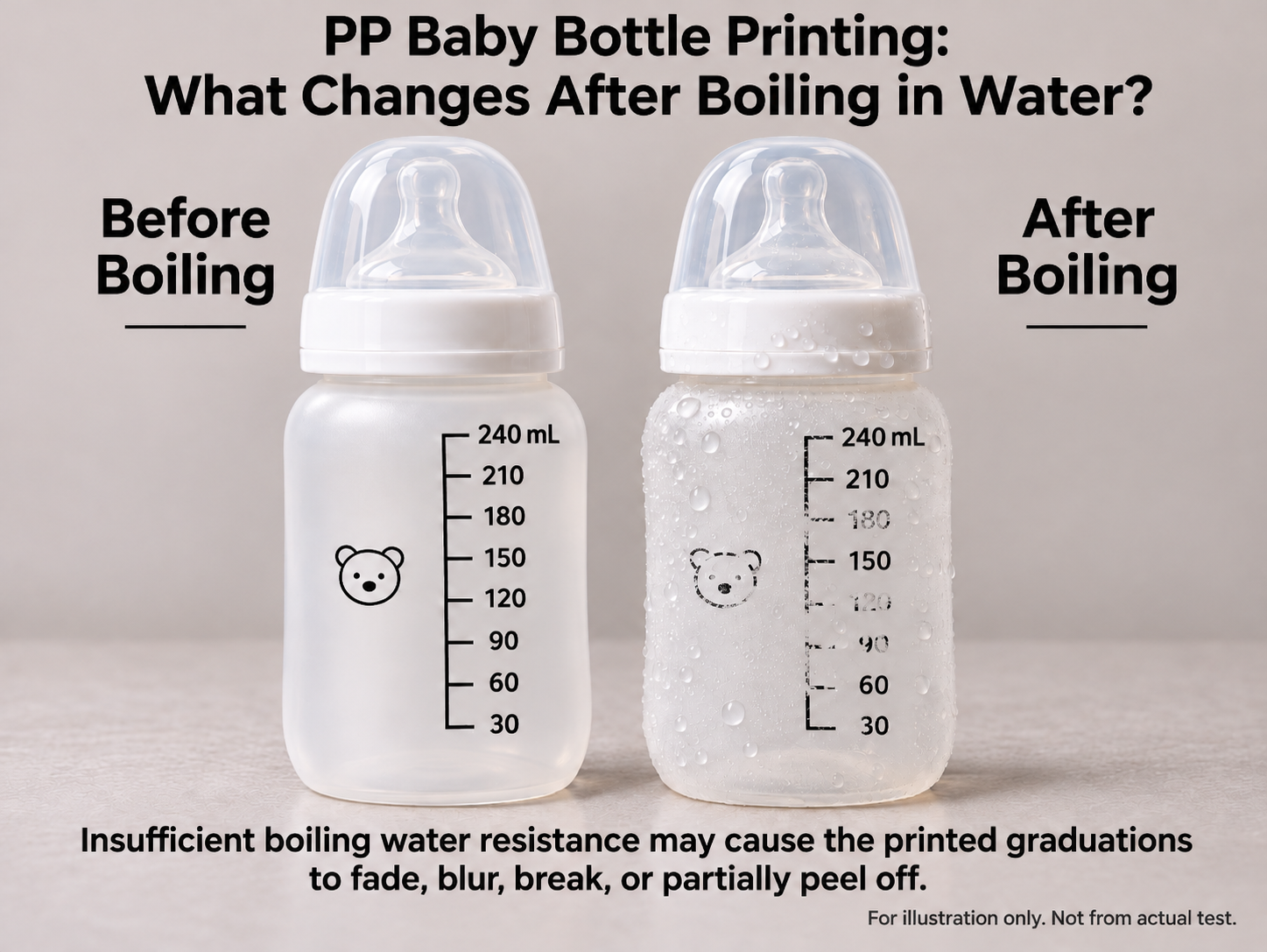
- Confirming adhesion on the actual PP bottle material.
- Testing hot-water exposure using the required temperature and duration. Hongsheng's stated reference condition is 99°C for 1 hour.
- Evaluating alcohol wiping with the specified alcohol type, concentration, contact time and wiping method.
- Checking eraser abrasion using an agreed test method, pressure and number of cycles.
- Allowing the ink to dry or cure fully according to its technical requirements before performance testing.
Test conditions, including contact time, exposure conditions and wiping method, should be defined according to the actual application requirements. Acceptance criteria should also be agreed before testing.
5. Frequently Asked Questions
Can PP baby bottles be printed without surface treatment?
Yes, compatible PP materials can be printed with a suitable no-treatment PP ink. Actual adhesion should be verified on the specific bottle material.
Does no-treatment PP ink work on every PP baby bottle?
No. Different PP grades, additives and molding conditions can affect ink adhesion. The ink should be evaluated on the actual bottle material before production.
What ink is suitable for printing on PP baby bottles?
A PP-specific ink should be selected based on the bottle material, printing process and required performance, including adhesion, hot-water resistance, alcohol resistance and abrasion resistance.
Can PP printing ink withstand hot-water exposure at 99°C?
Hongsheng's no-treatment PP ink has been evaluated for hot-water exposure at 99°C for 1 hour under specified test conditions. Customers should confirm the test method and acceptance criteria for their own application.
Why can printed markings fade after alcohol wiping?
Alcohol may interact with some ink resin systems and soften the ink film or reduce its resistance to wiping. The result depends on the ink formulation and the alcohol type, concentration and wiping conditions.
Does good adhesion guarantee abrasion resistance?
No. Adhesion and abrasion resistance are different performance properties. Both should be tested separately under the intended application conditions.
Does hot-water resistance mean the ink is approved for food contact?
No. Hot-water resistance of exterior printing does not establish food-contact compliance. Any food-contact or migration requirements must be assessed separately against the applicable regulations and testing requirements.
6. Conclusion
For PP baby bottle exterior printing, reliable adhesion is essential, but it is not the only performance requirement. Printed graduations and graphics may also need to withstand hot-water exposure, alcohol wiping and repeated friction.
Selecting a suitable no-treatment PP ink and evaluating it on the actual bottle material under defined test conditions can help manufacturers assess printing durability before mass production.
If you are developing PP baby bottle printing applications, contact Hongsheng to discuss your substrate, printing process and performance requirements.